 Largo Siding
 Belleair Beach sits on a narrow barrier island between the Gulf of Mexico and the Intracoastal Waterway, which means almost every home here takes weather from two directions at once. That's a different exposure than a house a few miles inland in Largo or Clearwater, and it changes what "siding replacement" actually needs to accomplish. A product and installation method that holds up fine in a sheltered subdivision can fail years early on a barrier island lot, and the failure usually isn't dramatic — it's slow moisture intrusion, cracked caulk joints, and a finish that chalks and fades faster than it should. Replacing siding on a Belleair Beach home is worth doing right the first time, because redoing it in five or eight years costs more than doing it correctly now.
What Belleair Beach's Climate Does to Siding
Four conditions combine here in a way most inland Pinellas County properties don't experience at full strength. Hurricane-force winds put direct lateral load and uplift pressure on wall cladding, and on a barrier island there's no tree line or row of neighboring structures to break that force before it hits the house. Intense, near-constant UV exposure — Florida sun reflecting off open water on top of direct overhead sun — breaks down lesser sidings, paints, and caulks faster than the same products age even a short distance inland. Wind-driven rain doesn't fall straight down during a storm; it drives sideways into every seam, joint, and butt edge, which is exactly where a poorly installed siding job starts to leak first. And salt air off the Gulf is a constant, low-level corrosive process that never stops working on fasteners, trim, and any material not built to resist it — it doesn't need a storm to do damage, just time.
Why This Matters More on a Barrier Island
Belleair Beach doesn't have the buffer that a mainland Largo neighborhood has. Homes here face the Gulf with comparatively little windbreak, so wind loads and salt exposure run higher than the county average. That's not a reason to avoid siding replacement — it's a reason to be more particular about the product and the installation than a generic quote would suggest.
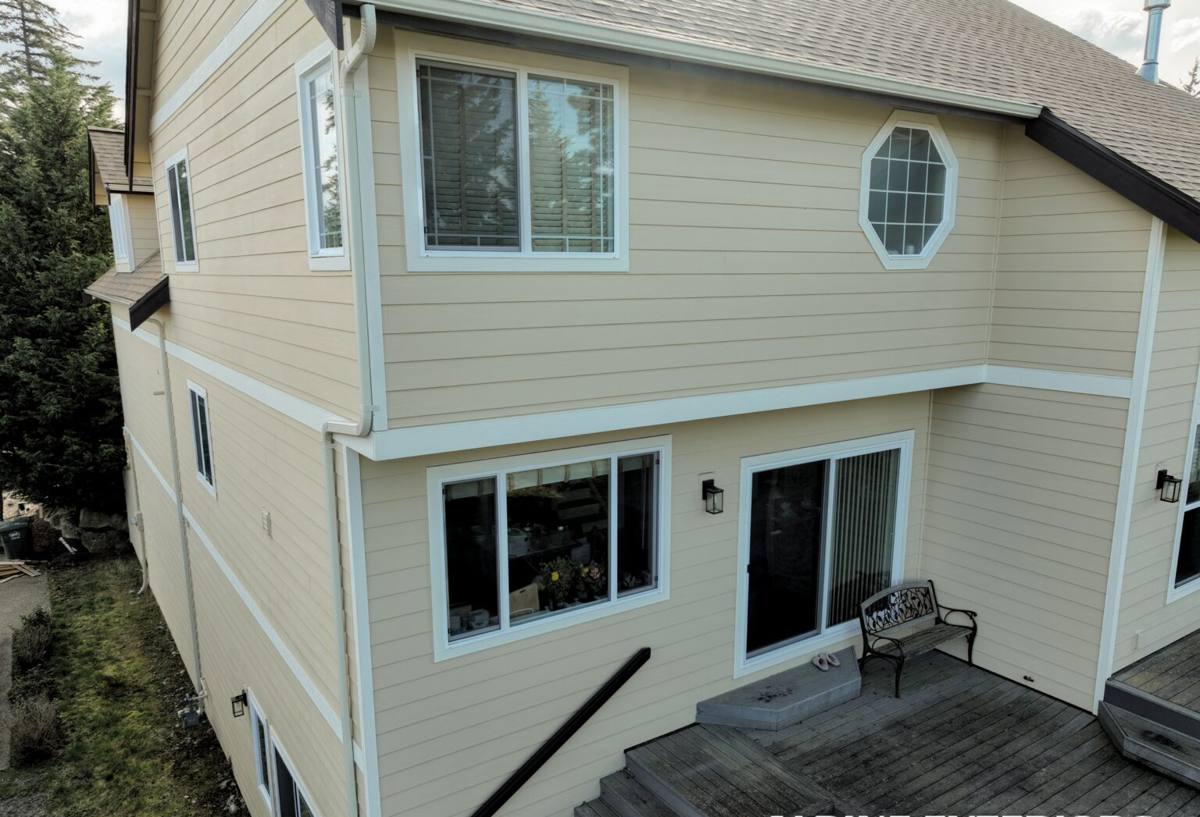
Signs a Belleair Beach Home Needs Siding Replacement
Some warning signs are the same anywhere; others show up faster or more severely this close to the Gulf. Worth checking for before you're dealing with an emergency:
- Soft or spongy spots when you press on the siding, especially near the bottom courses and around window and door trim
- Visible cracking, buckling, or warping — common on siding that's spent years absorbing humidity and UV without a durable factory finish
- Paint that's chalking, peeling, or fading unevenly, which points to a finish that isn't holding up to this location's sun exposure
- Gaps opening up at seams, corners, or trim joints where wind-driven rain can work its way behind the cladding
- Rising utility bills or noticeably drafty rooms, which can mean the wall assembly behind the siding is no longer doing its job
- Visible corrosion streaking from fasteners or trim hardware, a sign the material underneath is reacting to salt air exposure
What a Correct Siding Replacement Job Involves
Tear-Off and Substrate Inspection
Removing the old siding is also the only real chance to see what's happening behind it. On a barrier island home, that inspection matters — hidden moisture damage to sheathing or framing is common wherever old siding has been letting water in slowly, and it has to be found and corrected before anything new goes up. Skipping this step just seals the existing problem behind a new surface.
Moisture Barrier and Flashing
A weather-resistive barrier and correctly lapped flashing around every window, door, and penetration is what actually keeps wind-driven rain out of the wall assembly — the siding itself is the second line of defense, not the first. This is the detail that separates a job that survives hurricane season after hurricane season from one that starts leaking within a couple of years.
Fastening for Wind Load
Florida Building Code wind requirements aren't uniform across the state — Pinellas County's wind-borne debris region and Belleair Beach's direct coastal exposure call for a fastening schedule matched to that load, not a generic nailing pattern. Fastener spacing, type, and penetration depth all change based on exposure category and wind zone, and getting this wrong doesn't show up on install day — it shows up during the next major storm.
Finish and Trim Detailing
Butt joints, corners, and trim transitions are where most premature siding failures start. Correct caulking, proper gapping for material movement, and trim that's detailed to shed water rather than trap it all matter more here than in a more sheltered market, simply because there's less margin for a shortcut to go unnoticed.
Why We Only Install James Hardie Fiber Cement
We don't install vinyl, LP SmartSide, Cemplank, Allura, primed spruce, or cedar, and that's a deliberate standard, not an oversight. Each of those products has real strengths, but on a barrier island exposure like Belleair Beach, the trade-offs stop making sense to us as an installer who has to stand behind the work.
Vinyl siding is affordable and low-maintenance in mild climates, but it softens and can deform under the kind of sustained heat and UV this location sees, and it's rated for lower wind speeds than fiber cement in most manufacturer wind charts — a real concern this close to open Gulf exposure. Wood-based engineered siding like LP SmartSide performs well when the finish and flashing are maintained perfectly, but it's an organic, wood-strand product at its core, and consistent, uncompromising maintenance is a hard standard to guarantee on a coastal home over decades. Untreated wood species like cedar or primed spruce need the most ongoing upkeep of any option here — repainting, sealing, and monitoring for moisture — and salt air accelerates every stage of that maintenance cycle.
James Hardie fiber cement is non-combustible, dimensionally stable in humidity swings, and available in HZ product lines engineered for specific climate zones, including HZ5 formulations built for the wind, moisture, and temperature demands of the Gulf Coast. Its ColorPlus factory finish is baked on under controlled conditions rather than field-applied, which gives it more consistent UV and fade resistance than a job-site paint job, backed by a substantial transferable warranty on both the substrate and the finish. That combination — a stable substrate, a factory finish built for sun exposure, and a warranty structure that means something — is why it's the only siding we put on Belleair Beach homes.
Our Process, Start to Finish
- On-site assessment — we inspect the current siding, evaluate the home's specific wind and salt exposure, and check visible substrate condition
- Honest scope and product recommendation — which Hardie product line and profile fits the home, explained plainly, with the reasoning behind it
- Tear-off — old siding removed and the sheathing and framing underneath inspected for hidden moisture damage
- Repairs before cover-up — any rot, corrosion, or substrate damage found gets addressed before new material goes on, not hidden behind it
- Weather barrier and flashing installation — sequenced and lapped correctly around every window, door, and penetration
- Hardie installation — fastened to the schedule required for this location's wind exposure, with joints and corners detailed to shed water
- Final trim, caulk, and walkthrough — finished detailing and a walk-through so you know exactly what was done and why
Cost Factors for Belleair Beach Siding Replacement
Every home is different, but the same handful of factors drive most of the variation in a real quote for this location:
| Factor | How It Affects the Job |
|---|---|
| Substrate condition | Hidden moisture or rot found at tear-off adds repair work before new siding can go on correctly |
| Wind exposure category | Direct Gulf-facing walls typically require a more robust fastening schedule than a sheltered elevation |
| Product line and profile | HardiePlank lap siding, panel systems, and trim combinations price differently depending on the look and coverage needed |
| Home size and complexity | More corners, dormers, and trim transitions mean more detailing time regardless of square footage |
| Access and site conditions | Barrier island lots with tight setbacks or limited staging area can affect labor time |
Why Hiring a Crew That Already Works Belleair Beach Matters
Manufacturer installation guides are written for average national conditions, and Belleair Beach isn't average. A crew that mostly works inland can get every step technically right on paper and still under-detail the flashing lap on a Gulf-facing wall, or use a fastening pattern that meets code minimums but not the reality of sustained coastal wind. Those aren't mistakes that show up at the final walkthrough — they show up two or three hurricane seasons later, as leaks, corrosion, or a finish that's already fading.
We work this stretch of Pinellas County regularly, from Belleair Beach through Largo and the surrounding coastal communities, which means the wind exposure, salt air, and moisture behavior of homes on this barrier island aren't a guess for us. That experience shows up in the details that don't make it onto a spec sheet but decide whether the siding is still performing well a decade from now.
If you're weighing siding replacement for a Belleair Beach home, it's worth having someone look at the actual condition of the walls and the home's specific exposure before you start comparing quotes. We offer free, no-pressure estimates — use the form below to get a time on the schedule.