 Largo Siding
 Siding Installation in Oldsmar: Built for This Coastline, Not Just Any Coastline
Oldsmar sits at the edge of Old Tampa Bay, which means homes here take on a specific mix of punishment that inland Florida properties don't deal with in the same combination. You've got salt-laden air rolling off the water, long stretches of intense subtropical sun, wind-driven rain during summer storms, and the real possibility of hurricane-force gusts during the season. Any one of those factors will wear down a mediocre siding installation. All four together, year after year, expose bad workmanship and the wrong materials fast.
That's the lens we use for every siding installation job in Oldsmar. It's not just "put new panels on the house" — it's building an exterior wall system that manages water, resists wind uplift, holds its finish under UV load, and shrugs off salt exposure for decades, not years. We install exclusively James Hardie fiber cement siding, and we install it to the manufacturer's engineered specifications every time, because this climate doesn't leave room for shortcuts.
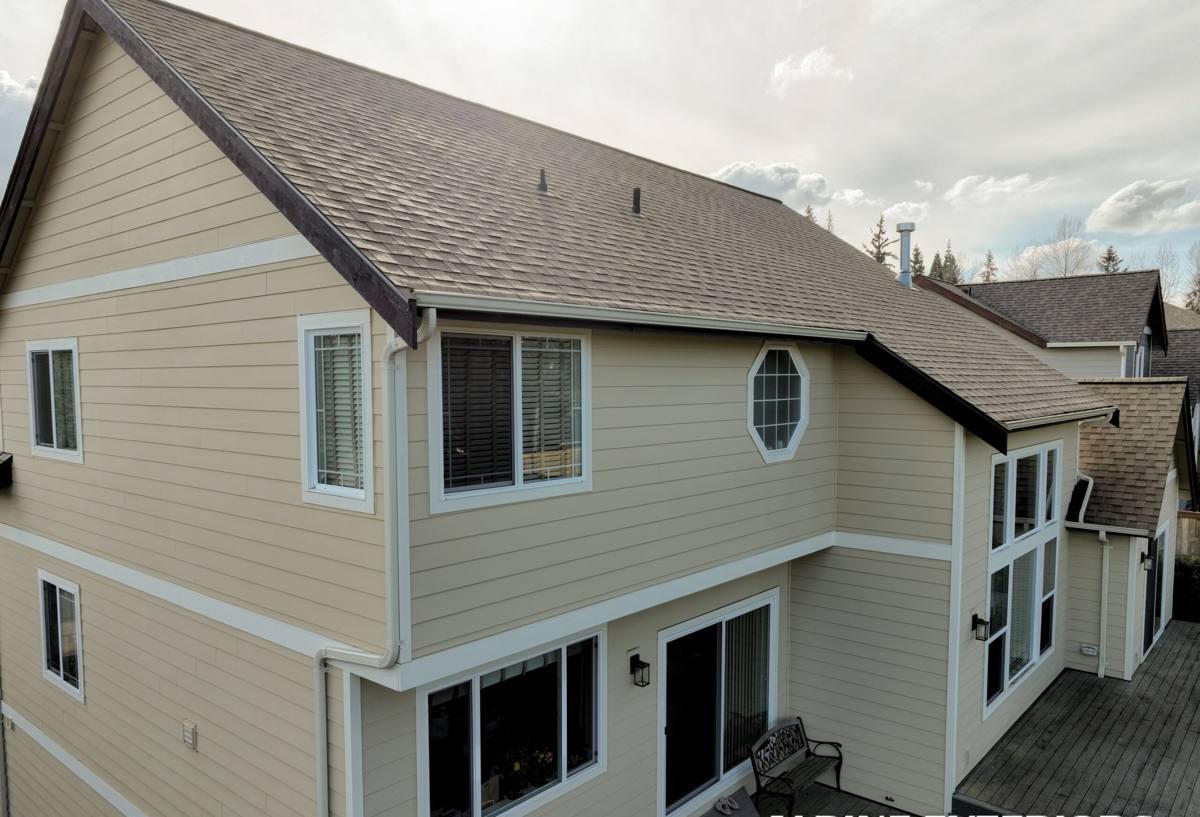
What Oldsmar's Climate Actually Does to Siding
Salt Air and Humidity
Even a few miles inland from the bay, airborne salt accelerates corrosion of fasteners, staples, and any metal trim components. It also feeds mold and mildew growth on any siding material that holds moisture at the surface or in seams. Products that rely on paint film alone for protection tend to chalk, fade, or lose adhesion faster here than in drier, less coastal parts of the state.
UV Exposure
Pinellas County gets sun exposure most of the year, not just in summer. That constant UV load breaks down pigments and surface coatings over time. Siding that isn't engineered with a factory-applied, UV-stable finish will fade unevenly, especially on south- and west-facing walls, within a handful of years.
Wind-Driven Rain
Rain in this region rarely falls straight down during storms — it comes in sideways, driven by gusts, and finds any gap in flashing, house wrap, or panel overlap. Water intrusion behind siding is one of the most common (and most expensive) failures we see on homes that had a rushed or under-specified installation, because moisture trapped behind the cladding rots sheathing and framing long before anyone notices a problem from the outside.
Hurricane-Force Wind
Even outside a direct hurricane hit, Oldsmar homes regularly experience tropical storm winds and severe thunderstorm gusts. Siding that isn't fastened correctly — wrong nail pattern, wrong fastener type, panels hung without proper blocking — is one of the first things to fail in high wind, and once one section pulls loose, wind gets behind the wall and the damage cascades.
What a Correct Siding Installation Involves
Tear-Off and Substrate Inspection
We don't install new siding over existing problems. Once the old siding comes off, we inspect the sheathing and framing underneath for rot, soft spots, or prior water damage — which is common on older Oldsmar homes that have been through decades of coastal weather. Any compromised wood gets replaced before anything new goes up. Skipping this step is one of the most common ways a siding job looks fine on day one and fails within a few years.
Water Management Layer
Before a single panel goes on, the wall needs a properly lapped weather-resistive barrier, correctly integrated flashing at every window, door, and penetration, and drainage detailing that lets any moisture that does get behind the cladding find its way back out. This is the part of the job nobody sees once it's finished, and it's the part that determines whether the wall stays dry for the next 30 years or rots quietly behind new siding.
Fastening to Manufacturer Spec
James Hardie publishes specific fastener types, spacing, and placement requirements for coastal and high-wind installations, and those specs exist for a reason — they're what the product's wind and warranty performance is actually tested against. We follow them exactly: correct nail type and length, correct penetration into framing, correct clearance at butt joints and corners. This is also where a lot of underbid siding jobs cut corners, because doing it right takes more time and more fasteners than doing it fast.
Finish Details
Trim, corners, caulking at transitions, and paint touch-up on cut edges all matter for long-term performance, not just appearance. Factory-primed cut edges get sealed, joints get the right sealant for a coastal environment, and trim is installed so it sheds water rather than trapping it.
The James Hardie Product Lines We Install
We only install James Hardie fiber cement, and Hardie makes several product lines suited to different looks and different exposure levels. Here's how the main options compare for a home in an area like Oldsmar:
| Product | Look | Best Suited For |
|---|---|---|
| HardiePlank Lap Siding | Traditional horizontal lap, widest range of profiles | Most Oldsmar homes — classic or updated exteriors |
| HardiePanel Vertical Siding | Clean vertical lines, often paired with board-and-batten trim | Modern or coastal-style homes, accent walls |
| HardieShingle Siding | Staggered or straight-edge shingle profile | Cottage or craftsman-style facades, gable accents |
| HardieTrim Boards | Fascia, corner boards, window and door surrounds | Finishing every installation, regardless of field siding choice |
All of these come in Hardie's ColorPlus factory finish, which is baked on and UV-cured before the boards ever reach your house — a meaningful advantage over field-applied paint in a climate that fades and chalks lesser finishes quickly. Hardie also engineers HZ5 product versions specifically for high-humidity, freeze-and-thaw-free climates like ours, which is what we specify for Oldsmar installations.
Our Installation Process, Start to Finish
- On-site assessment — we walk the exterior, check current siding and substrate condition, and measure for material takeoff.
- Written estimate — a clear scope covering tear-off, substrate repair allowances, product selection, and finish details, so there are no surprises mid-job.
- Material order — James Hardie boards and trim ordered to spec, including the correct HZ formulation and ColorPlus finish selection.
- Tear-off and substrate repair — old siding removed, sheathing inspected, any rot or damage repaired before moving forward.
- Water barrier and flashing installation — the weatherproofing layer that does the real long-term work.
- Siding installation — panels or planks hung to manufacturer fastening spec, with attention to seams, corners, and penetrations.
- Trim, caulking, and touch-up — finish details completed and inspected.
- Final walkthrough — we review the completed job with you before calling it done.
Signs Your Oldsmar Home May Need New Siding
Coastal exposure often causes siding problems that aren't obvious from the street. Some things worth checking or asking a contractor about:
- Visible warping, buckling, or gaps between siding sections
- Soft or spongy spots when you press on siding near the base of the wall
- Paint that's peeling, bubbling, or chalking heavily to the touch
- Rising utility bills that could point to failing insulation behind old siding
- Mold, mildew, or persistent dark streaking that keeps returning after cleaning
- Cracked or missing caulking at trim, window, and door edges
- Visible fastener corrosion or rust streaks bleeding through the surface
- Any history of interior water stains near exterior walls
If you're seeing more than one or two of these, it's worth getting an inspection before small problems become structural ones.
What Affects the Cost of a Siding Installation in Oldsmar
Every home is different, but the same handful of factors drive most of the cost variation we see on local jobs:
| Factor | Why It Matters |
|---|---|
| Home size and wall complexity | More square footage, corners, and roof lines mean more material and labor |
| Substrate condition | Rot or water damage found during tear-off adds repair scope before new siding goes up |
| Product line and profile | HardiePlank, HardiePanel, and HardieShingle carry different material costs |
| Trim and detail work | Corner boards, window surrounds, and accent details add labor time |
| Access and site conditions | Tight lots, tall walls, or landscaping obstacles affect scaffolding and staging |
| Existing siding removal | Tear-off of old vinyl, wood, or damaged fiber cement adds disposal and labor cost |
We don't quote a job until we've actually seen the house, because guessing at substrate condition or trim scope from a phone call leads to change orders later — something we'd rather avoid on both ends.
Why Hiring a Crew That Already Works in Oldsmar Matters
Siding installation isn't a one-size-fits-all trade. A crew that mostly works inland, in a milder climate, may never think twice about fastener corrosion resistance, wind-load fastening patterns, or the specific flashing details that matter when a wall faces open water. A crew that works Pinellas County regularly has already seen what fails here and why — which corners get skipped that shouldn't be, which details hold up through a real storm season, and which don't.
Local, licensed, and insured also isn't just a box to check. It means someone is accountable after the job is done, familiar with the permitting process for this jurisdiction, and around if a warranty question comes up five or ten years down the road — which matters more in a climate that tests materials this hard.
Maintenance After Installation
James Hardie siding, installed correctly, is genuinely low-maintenance compared to most alternatives, but "low-maintenance" doesn't mean "no maintenance" in a coastal environment. A rinse with a garden hose a few times a year removes salt residue and airborne grime before it builds up. Caulking at trim and penetrations should be checked periodically, since sealant is the one component that wears faster than the siding itself. Keeping irrigation heads from spraying directly on the wall and trimming back vegetation that holds moisture against the siding both go a long way toward protecting your investment for the long haul.
Get a Free, No-Pressure Estimate
If your Oldsmar home's siding is showing its age, or you're planning ahead before the next storm season, we're happy to take a look and walk you through honest options — no pressure, no obligation. Use the form below to request a free estimate.