 Largo Siding
 Board & Batten in a Tampa Bay Climate
Oldsmar sits on the edge of Old Tampa Bay, which means homes here take a different kind of beating than siding fifty miles inland. Salt-laden air moves off the water and settles on exterior surfaces year-round. Summer thunderstorms drive rain sideways against west- and south-facing walls. UV exposure is relentless almost every month of the year, and when a tropical system tracks through Pinellas County, sustained wind loads and wind-driven debris put every seam, fastener, and joint in board and batten siding to the test at once.
Board and batten is a vertical siding pattern — wide flat boards with narrower strips (battens) covering the seams between them — that reads as classic Florida farmhouse or modern coastal, depending on color and trim choices. It's a strong look for Oldsmar's mix of older ranch homes and newer builds near the water. But the pattern itself is only as good as the material underneath it. Vertical siding sheds water differently than horizontal lap siding, and in a high-moisture, high-wind coastal zone, the material choice matters more here than almost anywhere else in the country.
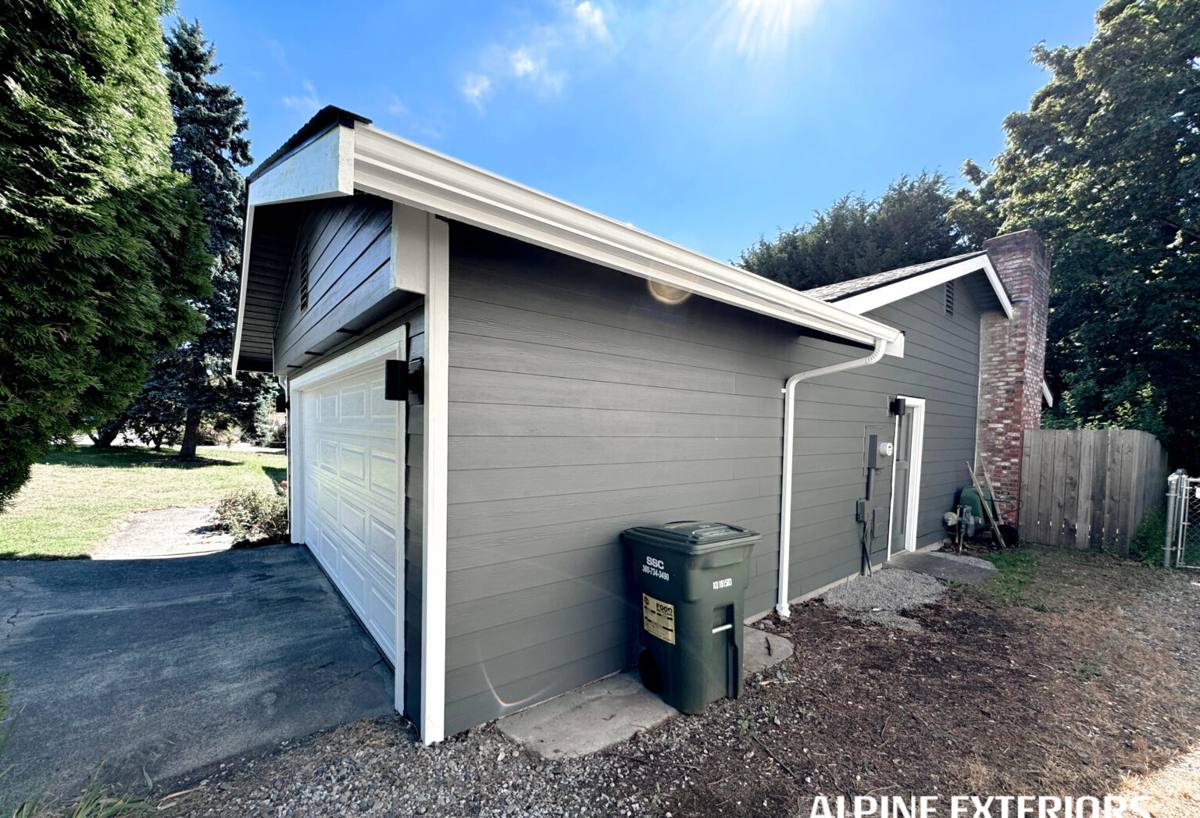
Why We Only Install James Hardie for This Application
We install James Hardie fiber cement exclusively — no vinyl, no LP SmartSide, no primed wood, no Cemplank or Allura. For board and batten specifically, that standard matters even more than it does for standard lap siding, because vertical siding has more seams, more end-cuts, and more exposure to standing water at the bottom of each board.
James Hardie's fiber cement is non-combustible, dimensionally stable in heat and humidity swings, and engineered in an HZ10 formulation specifically for high-humidity, wind-driven-rain climates like ours. It doesn't swell, rot, or delaminate the way wood-based and engineered-wood products can when moisture gets behind a board. The factory-applied ColorPlus finish is baked on and warranted against fading and peeling — a real advantage in a climate where UV breaks down field-applied paint faster than almost anywhere in the country. For a pattern like board and batten, where the vertical grain lines and shadow lines are part of the visual appeal, a finish that holds its color evenly matters.
What We Don't Recommend, and Why
Vinyl board and batten is common and inexpensive, but it's a thin material that can warp in direct, sustained heat and doesn't hold up structurally in higher wind zones the way a fastened fiber cement panel does. Primed wood and cedar board and batten look beautiful when new, but they demand a repainting and caulking cycle that's hard to keep up with in Pinellas County's humidity, and end-grain moisture intrusion is a real long-term risk on a vertical pattern with this many cut edges. LP SmartSide and similar engineered-wood products perform reasonably in drier climates, but their strand-based core is more vulnerable to prolonged moisture exposure than fiber cement — a real consideration this close to the bay. We're not saying these products can't be installed correctly by someone. We're saying that after years of doing this work in Pinellas County, James Hardie is the only board and batten material we're willing to put our name on.
What Correct Board & Batten Installation Actually Involves
Board and batten fails prematurely almost never because of the material — it fails because of installation shortcuts that don't show up until year three or four. A correct installation on an Oldsmar home includes:
- A weather-resistant barrier installed and lapped correctly behind every panel, with all seams taped
- Proper flashing at every window, door, and roofline penetration before a single board goes up
- Correct fastener type, spacing, and depth per James Hardie's published installation guidelines — not shortened to save labor time
- Bottom clearance from grade, decks, and roof lines so boards aren't wicking moisture from standing water or mulch beds
- Battens fastened independently, not just decoratively lapped over the field boards, so wind uplift can't work them loose
- All factory-cut edges sealed or back-primed at cut points to prevent moisture entry where the factory finish has been interrupted
- Caulking at butt joints and trim transitions using a product rated for the movement and UV exposure of this climate
Skip any one of these steps and the siding may look fine for a year or two before a problem shows up — usually as a soft spot, a stain line, or a batten that's started to separate. James Hardie's warranty depends on installation to their specification, which is one more reason installation quality isn't optional.
Board & Batten Material Comparison
| Material | Moisture Behavior | Wind/Storm Durability | Finish Longevity | Long-Term Maintenance |
|---|---|---|---|---|
| James Hardie Fiber Cement | Does not rot, swell, or absorb water into the core | Rated for high wind zones when installed to spec | Factory ColorPlus finish, warranted against fade/peel | Occasional wash; no repainting cycle |
| Vinyl Board & Batten | Doesn't absorb water, but seams and panels can flex/warp | Can crack or blow off in sustained high wind | Color molded in but fades and chalks over time | Low, but panels can't be spot-repaired invisibly |
| Primed Wood / Cedar | Vulnerable to rot at end-grain and fastener points | Adequate if well-maintained; fasteners can back out | Field-applied paint, needs recoating every few years | High — recurring paint, caulk, and inspection |
| LP SmartSide / Engineered Wood | Strand-based core more sensitive to prolonged moisture | Generally solid when new and properly sealed | Factory-treated but edge sealing is critical | Moderate — edge and joint inspection matters |
How We Approach a Board & Batten Project in Oldsmar
1. On-Site Assessment
We walk the home and look specifically at drainage paths, roofline transitions, existing moisture damage, and how the walls have weathered previous storm seasons. Board and batten shows up differently on a ranch-style home with low roof overhangs than it does on a two-story build closer to the water, and the assessment drives the flashing and clearance plan.
2. Scope and Material Plan
We confirm which James Hardie board and batten profile and HardieZone product fit the home, plan out trim and corner details, and give you a straightforward, itemized scope — no vague allowances.
3. Tear-Off and Substrate Check
Old siding comes off, and we inspect the sheathing underneath for hidden rot or moisture damage before anything new goes up. This step gets skipped by crews trying to move fast — we don't skip it, because covering a problem doesn't solve it.
4. Weather Barrier and Flashing
This is the layer that actually keeps water out of your walls, and it's also the layer nobody sees once the siding is up. We install it to spec, every time.
5. Installation
Boards and battens go up per James Hardie's fastening schedule, with attention to consistent reveal lines and properly sealed joints — the details that determine whether the finished wall looks crisp in ten years or shows every seam.
6. Final Walkthrough
We walk the finished job with you, point out anything worth noting for future maintenance, and make sure the work matches what was scoped.
Problem Areas We Pay Extra Attention To
A handful of trouble spots come up repeatedly on coastal Pinellas County homes, and we build our process around catching them before they become callbacks:
- Bottom-of-wall clearance — landscaping, mulch, and grade that's crept up over the years and now sits too close to the siding's bottom edge
- Window and door head flashing — a common gap point where wind-driven rain finds its way behind the cladding
- Roof-to-wall transitions — kickout flashing that's missing or undersized, sending roof runoff straight down the wall
- Batten fastening — decorative-only battens that aren't independently secured and can work loose under sustained wind
- Salt air corrosion on fasteners and trim near the water, which is why fastener spec isn't a place to cut corners this close to the bay
Maintaining Board & Batten Siding in This Climate
- Rinse the exterior periodically to clear salt residue, especially on sides facing the water
- Keep mulch, soil, and plantings from building up against the bottom edge of the siding
- Inspect caulking at trim and joints annually, particularly after hurricane season
- Watch for any soft spots, staining, or separation at seams and address them early rather than waiting
- Keep gutters and downspouts clear so roof runoff isn't discharging onto wall sections
Why Local Experience in Oldsmar Matters
A crew that only occasionally works this close to Tampa Bay treats every job like a generic siding install. A crew that works Pinellas County regularly already knows which wall orientations take the worst of the wind-driven rain, how quickly UV breaks down an unprotected finish here, and where salt air does the most damage to fasteners and trim. That local pattern recognition shows up in the small decisions — flashing details, fastener choice, clearance planning — that determine whether board and batten siding holds up through storm season after storm season or starts showing problems in year three.
If you're weighing board and batten siding for a home in Oldsmar, we're glad to take a look and give you a straightforward, no-pressure estimate — what your home actually needs, what it involves, and what it costs, with no inflated claims either direction. Use the form below to get started.