 Largo Siding
 Treasure Island sits about as close to the Gulf as a Pinellas County property can get, and that location is exactly why metal roofing gets asked about here more than almost anywhere else we work. Barrier island homes take a beating that inland Largo properties simply don't see in the same combination: constant salt-laden air, intense reflected sun off the water, and the first line of exposure when a tropical system pushes wind-driven rain onshore. A roof built for this stretch of coastline has to handle all three at once, year after year, not just survive one bad storm.
This page covers what metal roofing actually needs to do on a Treasure Island home, what separates a correct installation from a shortcut one, and how our process works from first estimate to final walkthrough.
Why Treasure Island Roofs Face a Different Load Than Inland Largo
Every roof in Pinellas County deals with heat, humidity, and hurricane season. What changes on the island is the intensity and constancy of the exposure.
Salt Air and Corrosion
Airborne salt from the Gulf and Boca Ciega Bay settles on every exterior surface, including roofing metal, fasteners, and flashing. On non-coastal homes a mediocre coating or an undersized fastener might last for years before it becomes a visible problem. On Treasure Island, that same shortcut shows up as rust streaking, fastener corrosion, or coating breakdown much sooner. The metal itself, the protective coating, and every screw and clip in the system all need to be rated for a marine environment, not just standard exterior use.
UV and Heat
Reflective metal roofing already outperforms asphalt shingles in a hot climate, but the coating that gives a metal roof its color and its reflectivity does the real work. Cheaper paint systems chalk, fade, and lose their reflective properties faster under the kind of direct, near-constant sun a waterfront property receives. That fading isn't just cosmetic — a coating that's breaking down is also losing some of its ability to shed heat and protect the substrate underneath.
Wind and Wind-Driven Rain
Treasure Island is exposed to Gulf-facing wind with very little to break it before it reaches a roofline. During a tropical storm or hurricane, that wind doesn't just push against the roof — it drives rain sideways and upward under trim, at ridge caps, and around penetrations. A metal roof's wind resistance depends on the fastening pattern and panel engineering; its resistance to wind-driven water intrusion depends on the underlayment, flashing details, and how the edges and penetrations were sealed. Both have to be right, not just one.
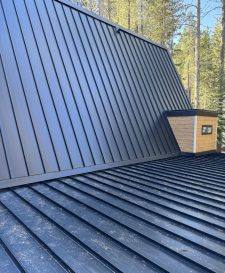
What a Correctly Installed Metal Roof Includes
"Metal roof" covers a wide range of systems, and the difference between a roof that holds up on the island and one that doesn't usually comes down to details that aren't visible from the ground.
- A high-quality synthetic or self-adhering underlayment rated for wind-driven rain, not a minimal-cost felt product
- Fasteners and clips rated for coastal/marine exposure, matched to the panel material to avoid galvanic corrosion between dissimilar metals
- A fastening pattern and panel system engineered to meet Florida Building Code wind requirements for this exposure category
- Properly formed and sealed flashing at every penetration, valley, and roof-to-wall transition
- A finish coating system built for UV and salt exposure, with real reflective and corrosion-resistance performance, not just a painted look
- Correct ventilation so heat and moisture don't build up under the panels
Skip any one of these and the roof may look fine for a while. The problems that show up later — rust at fastener heads, leaks at a valley during the next heavy rain, panels that lift in a strong gust — almost always trace back to one of these details being done on the cheap.
Panel Types and How They Perform in a Coastal Setting
There isn't one "best" metal roof for every Treasure Island home — the right system depends on the roof's shape, the homeowner's budget, and how long they want to go before any maintenance is needed.
| System | Typical Use | Coastal Considerations |
|---|---|---|
| Standing seam (aluminum or coated steel) | Most common choice for full roof replacements on waterfront and near-waterfront homes | Concealed fasteners reduce corrosion points; strong wind uplift performance when properly installed |
| Exposed-fastener metal panels | Budget-conscious replacements, outbuildings, some porch and carport roofs | Lower upfront cost, but exposed fasteners need periodic inspection and eventual re-tightening or replacement near salt air |
| Metal shingles/shakes | Homes wanting a traditional shingle look with metal's durability | More seams and interlocking joints than standing seam, so flashing and installation precision matter even more |
| Aluminum vs. coated steel | Material choice within any of the above | Aluminum won't rust and handles salt exposure very well; coated steel costs less but depends more heavily on an intact coating to resist corrosion |
For homes directly exposed to Gulf air, we generally steer clients toward aluminum standing seam or a high-grade coated steel system with concealed fasteners. It's a higher upfront investment than exposed-fastener panels, but it's also the system that needs the least maintenance attention over time in a marine environment.
Repair, Recoat, or Replace: How We Evaluate an Existing Metal Roof
Not every metal roof on Treasure Island needs to be torn off and replaced. Part of an honest evaluation is figuring out which category a roof actually falls into.
Repair
Isolated issues — a failed sealant joint, a loose section of ridge cap, a penetration flashing that's come apart — are often repairable without touching the rest of the roof, especially if the underlying panels and fasteners are still in good shape.
Recoat
If the panels and fasteners are structurally sound but the finish coating has chalked, faded, or started to lose adhesion, a professional-grade recoat can restore reflectivity and add another layer of corrosion protection. This only makes sense when the substrate underneath is still solid — recoating over active rust or failing fasteners just hides a problem instead of solving it.
Replace
When corrosion has reached the panels themselves, when fasteners are failing across large sections, or when the roof was undersized for its wind exposure to begin with, replacement is the honest recommendation. We'll say so plainly rather than selling a patch that won't hold through the next storm season.
Our Process for Treasure Island Metal Roofing Projects
- On-site inspection. We walk the roof (or use appropriate access for steep or difficult sections) and check the panels, fasteners, flashing, and any problem areas the homeowner has noticed.
- Honest evaluation. We explain what we found in plain terms — what's fine, what needs attention now, and what can wait — along with repair, recoat, or replacement options where more than one is reasonable.
- Written estimate. Scope, materials, and cost are spelled out before any work starts. No surprise add-ons once the job is underway.
- Material and system selection. We help match the panel type, gauge, and coating system to the specific home — its exposure, roof shape, and the homeowner's budget and maintenance expectations.
- Installation to code. Fastening patterns, underlayment, and flashing details are all done to meet Florida Building Code wind and water requirements for this coastal exposure category, not just minimum pass standards.
- Final walkthrough. We review the completed work with the homeowner and go over any maintenance recommendations specific to a salt-air setting.
Maintenance That Actually Matters Near the Gulf
Metal roofing is low-maintenance compared to most other roofing materials, but "low-maintenance" isn't the same as "no-maintenance" — especially this close to the water.
- Rinse accumulated salt residue off the roof periodically, particularly after long dry stretches with no rain to naturally wash it away
- Keep gutters and valleys clear so water isn't sitting against panels or trim longer than it needs to
- After any major storm, have the roof checked for lifted panels, damaged flashing, or fastener issues before a small problem becomes a leak
- Watch for early rust spotting at fastener heads or cut edges and address it before it spreads
- Trim back overhanging vegetation that traps moisture or debris against the roof surface
Why Local Experience on the Island Matters
A metal roofing system that's correctly specified for a inland Pinellas County home isn't automatically correct for a Treasure Island one. The wind exposure category, the corrosion resistance needed in the hardware, and the coating performance required to hold up under that much reflected sun and salt air are all more demanding here. A crew that regularly works barrier island properties knows to spec for that exposure from the start, instead of treating it as an afterthought or a generic coastal upcharge.
Largo Siding Company works throughout Pinellas County, including the barrier islands, and we bring the same standard to every metal roofing job: correct materials, correct installation details, and a straight answer about what a roof actually needs — not the minimum that will pass inspection.
If you're weighing a metal roof for a Treasure Island property, or you want an honest look at one that's already up there, we're glad to come out for a free, no-pressure estimate. Use the form below to get started.