 Largo Siding
 Why Decks Fail Faster on Redington Beach
Redington Beach sits right on the Gulf, and that location is part of what makes it such a desirable place to live — it's also exactly why decks here age faster than decks built ten or fifteen miles inland. Salt-laden air corrodes fasteners and hardware from the inside out, long before the visible wood or decking surface shows a problem. Intense, near year-round UV breaks down wood fibers and the resins in composite boards. Wind-driven rain off the water finds its way into every seam, screw hole, and end cut that isn't properly sealed. And when a named storm brings hurricane-force gusts, a deck's connections to the house and its footings take the load first.
None of this means a deck on the barrier island is a bad investment. It means the build has to account for the environment it's actually in, not a generic build spec written for a house in Central Florida clay soil forty miles from salt water. That's the difference between a deck replacement that holds up and one that starts showing rust streaks and soft spots within a couple of seasons.
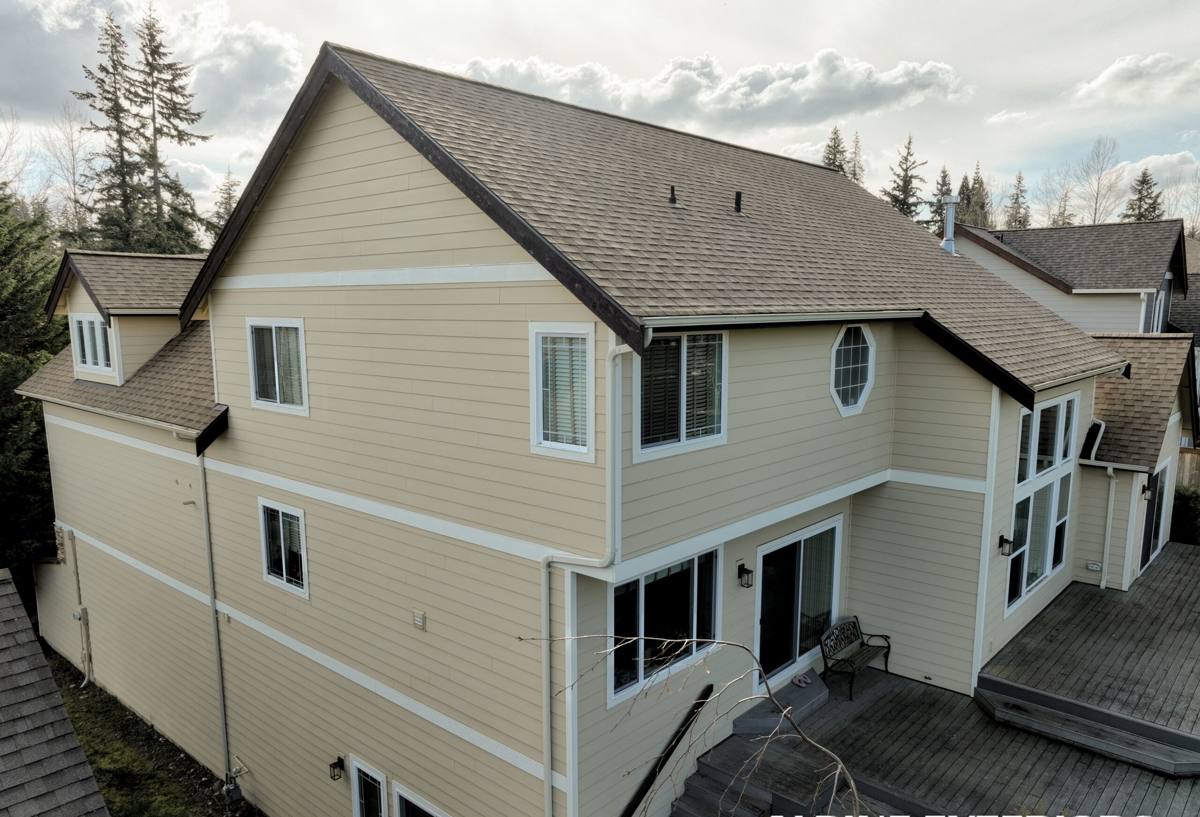
Signs Your Deck Has Reached the End of Its Life
Not every deck problem means a full replacement — sometimes a board or two, or a handful of fasteners, is all that's needed. But there's a point where patching stops making sense and a full rebuild is the honest recommendation. Common signs we look for on Pinellas County coastal homes include:
- Soft, spongy, or spring-feeling spots underfoot, especially near the house or stair landings
- Visible rust bleeding from screw heads, joist hangers, or ledger bolts
- Cracking, splitting, or delamination on composite or older wood-composite hybrid boards
- Gaps opening up where the deck meets the house, which can point to ledger or flashing failure
- Railings or stair stringers that flex or feel loose when you put weight on them
- Visible corrosion or wood decay on support posts, beams, or footings underneath the deck
If you're seeing more than one of these at once, the substructure is usually further along than the surface boards let on. That's worth an honest look before you spend money resurfacing a frame that's not going to support it much longer.
What a Correct Deck Replacement Actually Involves
A deck replacement is a structural project first and a finish-material choice second. Getting the order of priorities right is what separates a deck that lasts through Gulf-front weather from one that needs attention again in a few years.
Substructure, Footings, and Framing
Everything starts below the decking boards. Footings need to be sized and set correctly for the load and for local soil conditions, posts and beams need to be rated for exterior, moisture-heavy exposure, and the ledger board connection to the house — one of the most common failure points on any deck, coastal or not — needs proper flashing and fastening so water doesn't wick into the house framing. On a barrier island home, we also pay close attention to ventilation under the deck and around framing members, since trapped moisture combined with salt air accelerates corrosion and rot far faster than either factor alone.
Fasteners and Hardware
This is where a lot of otherwise decent decks fail early in a salt-air environment. Standard galvanized fasteners and connectors are not built for sustained coastal exposure — they'll rust, weaken, and eventually let go well before the wood or decking around them fails. Correctly built coastal decks use stainless steel or coastal-rated, corrosion-resistant fasteners and structural connectors throughout, not just on the visible top surface. It costs more up front and is genuinely worth it here.
The Decking Surface
Only after the frame and hardware are right does the surface material matter. Board spacing needs to account for Florida humidity and thermal movement, end cuts and field cuts need to be sealed if the material calls for it, and fastening patterns need to match what the manufacturer specifies for wind uplift resistance — not just for appearance.
Choosing a Decking Material for Gulf-Front Exposure
There's no single "best" decking material for every home — it depends on your budget, how much maintenance you want to take on, and how close you are to open salt water. Here's how the common options compare for a barrier island property like the ones in Redington Beach.
| Material | Salt Air Performance | Maintenance | Typical Lifespan |
|---|---|---|---|
| Pressure-treated wood | Fair — needs consistent sealing to resist salt and UV | High — annual cleaning and resealing | 10–15 years with upkeep |
| Tropical hardwood | Good — naturally dense and rot-resistant | Moderate — periodic oiling to maintain color | 20+ years |
| Capped composite | Very good — protective shell resists salt and UV fading | Low — occasional washing | 25–30 years |
| PVC decking | Excellent — no wood fiber to absorb moisture or salt | Low — occasional washing | 25–30+ years |
We're generally cautious about uncapped, budget composite boards this close to the water — early-generation composite products without a protective cap can absorb moisture at the surface, and that combined with salt exposure leads to fading, staining, and softening faster than the manufacturer's marketing suggests. That's a maintenance and warranty trade-off we'll walk you through honestly rather than push whatever's cheapest that day.
Permits and Elevation Considerations Near the Gulf
Barrier island properties in Pinellas County often carry flood zone designations and elevation requirements that inland Largo properties don't deal with. Deck replacements — especially ones involving new footings or any change to the structure's footprint — typically require a permit through the local building department, and in some cases the work needs to account for base flood elevation or breakaway construction rules if the deck is low to grade near the water. We handle the permitting process as part of the job rather than leaving you to sort it out, and we'll flag upfront if your property's flood zone status is likely to affect the scope of work.
Our Deck Replacement Process
- On-site assessment. We inspect the existing deck, ledger connection, footings, and framing to determine what's driving the failure and whether repair is genuinely an option or replacement is the honest call.
- Material and layout discussion. We walk through decking options suited to your home's exposure, your budget, and how you actually use the space.
- Permitting. We prepare and submit the required permit documentation before any demolition begins.
- Removal. The old deck is removed down to a clean, safe worksite, with attention to protecting the surrounding landscaping and structure.
- Framing and structural work. New footings, posts, beams, and ledger connections are built to code with corrosion-resistant hardware throughout.
- Decking installation. Boards, railings, and stairs are installed per manufacturer spacing and fastening specs, not shortcuts.
- Final walkthrough. We go over the finished deck with you, including what maintenance it will and won't need.
Why a Crew That Already Works Redington Beach Matters
Deck replacement isn't a specialty limited to waterfront towns — but building one correctly this close to the Gulf takes a different set of habits than building one in a typical inland Largo neighborhood. A crew that regularly works barrier island properties already knows which fastener grade to reach for by default, already has a working relationship with the local permitting process for coastal and flood-zone properties, and has seen firsthand what happens to a deck built to a generic spec after one or two hurricane seasons. That experience shows up in decisions you might not think to ask about — the extra flashing detail at the ledger, the hardware upgrade that isn't itemized as an "upsell," the ventilation gap under the frame. It's the difference between a deck built to pass inspection once and a deck built to hold up to what Pinellas County's coastline actually throws at it year after year.
Maintenance Checklist for Your New Deck
A correctly built deck still needs some ongoing attention in a salt-air environment — but it should be light maintenance, not a constant battle. Once your new deck is in, keep it in good shape with a simple routine:
- Rinse salt spray and debris off the surface with fresh water every few weeks, more often after storms
- Keep gutters and downspouts clear so runoff isn't dumping onto or under the deck
- Check railings, stair connections, and any visible fasteners for looseness once or twice a year
- Trim back landscaping that traps moisture against the deck's edge or underside
- Reseal wood or hardwood decking on the schedule the material actually requires — don't stretch it to save time
- Walk the underside of the deck occasionally to check for corrosion on hardware or moisture around the ledger
If your deck in Redington Beach is showing its age, or you just want an honest opinion on whether it's a repair or a full replacement, we're happy to take a look. Reach out for a free, no-pressure estimate using the form below.