 Largo Siding
 Board & Batten Siding in Pinellas Park: A Look With Real Job Requirements
Board and batten siding has become a favorite in Pinellas Park and across Largo for a reason — the vertical lines read as modern farmhouse on some homes and coastal cottage on others, and it pairs cleanly with a lap-sided main field as an accent on a gable, porch wall, or garage face. It's a striking profile. It's also one of the least forgiving profiles when the wrong material or the wrong crew is behind it, because the same wide, flat vertical boards that make it look good are also the ones most exposed to sun, wind, and water in a Pinellas County climate.
This page is about that specific combination: board and batten siding, installed correctly, on homes in Pinellas Park. Not a general siding overview — the details that matter for this profile, in this area, given what the weather here actually does to a house.
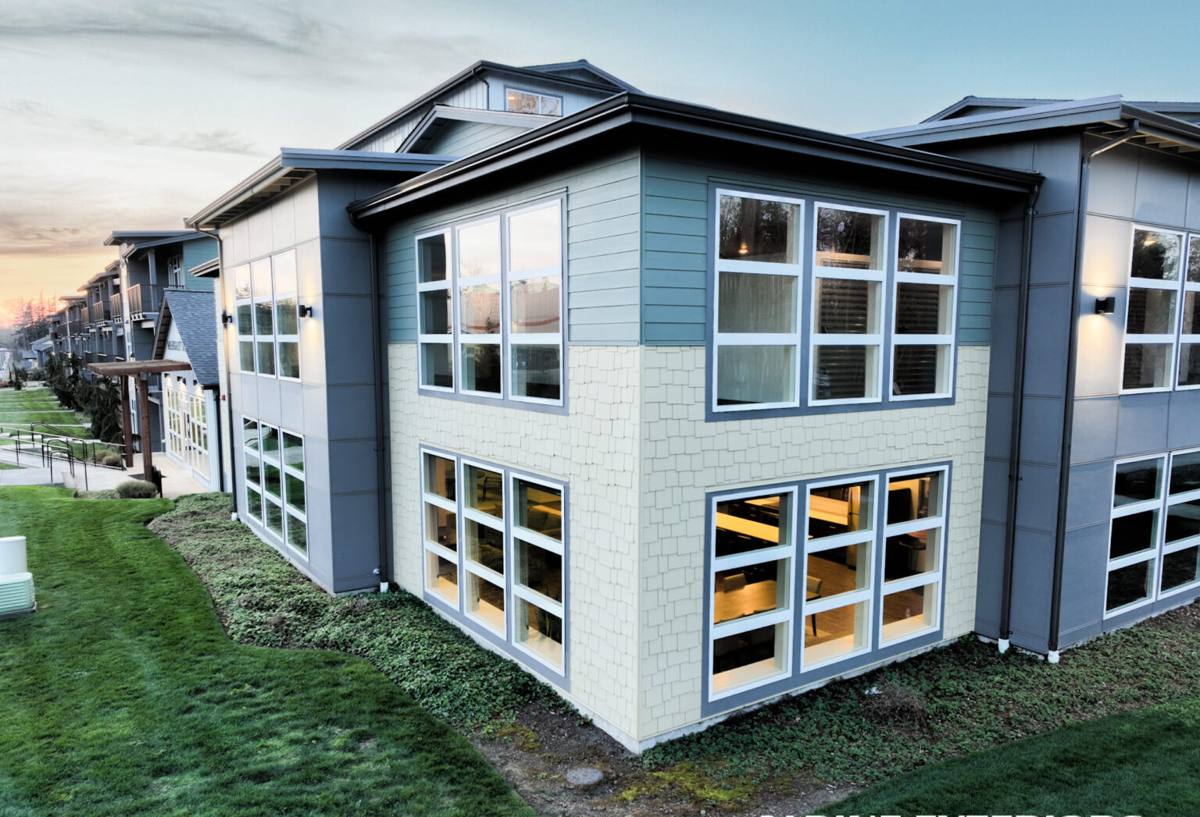
What Pinellas Park's Climate Actually Does to Board & Batten Siding
Pinellas Park sits inland from the Gulf but still squarely inside a hurricane-exposed part of Pinellas County, and every board and batten installation on a local home has to survive the same combination of stresses year after year:
Wind
Hurricane-force winds don't just push on a wall — they create uplift and pressure cycling at every seam and fastener. Board and batten has more vertical seams per square foot than wide lap siding, and every one of those seams is a potential place for wind-driven rain to get pushed backward, up and under a board, if it isn't detailed correctly.
Sun
Vertical board and batten faces catch direct, intense Florida sun for most of the day, on both the boards and the recessed battens between them. Materials that aren't dimensionally stable expand, contract, and eventually crack, warp, or fade unevenly along that pattern — and because the lines are so visually prominent, any warping or fading shows up faster than it would on a flat lap wall.
Wind-driven rain and humidity
Gulf storms don't just drop rain — they drive it sideways into vertical surfaces. Combined with Pinellas County's year-round humidity, any moisture that gets behind a board and can't dry out becomes a rot or mold problem at the sheathing, not just a cosmetic one.
Salt air
Homes throughout this part of the Tampa Bay region deal with salt-laden air that accelerates corrosion on fasteners, trim, and any metal flashing that isn't rated for it. A board and batten wall is only as good as the fasteners and flashing hidden behind it.
Why the Material Choice Matters More With This Profile
Board and batten is sold in several materials, and the differences that are easy to overlook on a lap-sided wall become obvious on a batten wall within a few Florida summers.
Vinyl board and batten
Vinyl panels are lightweight and inexpensive, but they expand and contract significantly with heat, and in direct Pinellas Park sun that movement is constant. Over time panels can bow, the vertical battens can separate from the field, and in a hurricane-force wind event vinyl is more prone to cracking or blowing off than a rigid material.
Wood board and batten
Real wood battens and boards look great on day one, but wood is a moisture sponge. In a climate with this much humidity and wind-driven rain, wood board and batten needs frequent repainting and caulk maintenance, and any spot where a fastener or seam fails becomes a rot entry point.
Engineered wood (LP-type) board and batten
Engineered wood products perform reasonably well when every cut edge and fastener point is factory-sealed and field-treated exactly to spec, but they remain wood-based — if moisture reaches an exposed edge or an installer skips a treatment step, swelling and edge deterioration can follow. That sensitivity to installation quality is a real trade-off, and it's one reason we don't install these products.
Why we only install James Hardie fiber cement
Largo Siding Company installs James Hardie fiber cement exclusively — including for board and batten — because it removes the two biggest failure points above: it isn't a petroleum product that softens and warps in heat, and it isn't wood-based, so it doesn't swell, rot, or feed mold at a cut edge. It's non-combustible, it's engineered specifically for humid, storm-exposed climates like ours, and it holds a factory finish instead of relying on field-applied paint to survive the sun.
James Hardie's Board & Batten System, Specifically
James Hardie builds board and batten as an engineered panel-and-batten system rather than individual boards nailed up ad hoc, which is part of what makes it perform consistently.
- HZ10 climate engineering — Hardie's HZ product zoning is formulated for hot, humid, storm-prone regions like the Gulf Coast, which is the zoning that applies here in Pinellas County.
- ColorPlus factory finish — color is baked on in a controlled factory process rather than field-painted, so it resists UV fade far longer than site-applied paint on wood or the color-through pigment in vinyl.
- Dimensional stability — fiber cement doesn't expand and contract with heat the way vinyl does, so seams and reveals stay tight instead of gapping or bowing over a summer.
- Texture options — smooth or cedarmill-textured faces, so the board and batten look can go clean-modern or more traditional depending on the home.
What a Correct Board & Batten Installation Actually Involves
The material is only half the equation. Board and batten fails or succeeds based on details most homeowners never see once the wall is closed up.
Weather-resistant barrier and flashing first
Before a single board goes up, the sheathing needs a continuous weather-resistant barrier, and every window, door, and penetration needs flashing that directs water outward and down — never trapping it behind the siding. This step matters more on board and batten than lap siding because vertical seams give wind-driven rain more direct paths inward if the barrier underneath isn't right.
Fastening and batten spacing to spec
James Hardie publishes exact fastener types, spacing, and embedment requirements for board and batten, and those specs assume corrosion-resistant fasteners — a real requirement in salt-exposed Pinellas County air, where standard fasteners corrode and stain the siding face over time.
Clearances and drainage
Board and batten needs proper clearance above rooflines, decks, patios, and finished grade so water can't wick up into the bottom of the boards. This is one of the most commonly skipped details on rushed installs, and it's one of the first places rot shows up.
Caulk as a detail, not a fix
Caulk should seal specific transition points called out in the manufacturer's instructions — it should never be used to compensate for a poor cut, a missed flashing step, or an incorrect gap. A board and batten wall that depends on caulk to stay dry will fail as soon as that caulk ages, which happens faster under constant Florida sun.
Our Process for Pinellas Park Board & Batten Projects
- On-site assessment — we look at the existing wall assembly, sheathing condition, and any past moisture damage before quoting anything.
- Tear-off and sheathing repair — old siding comes off, and any compromised sheathing is repaired before we move forward, not covered over.
- Barrier and flashing installation — weather-resistant barrier and flashing go in at every opening and joint per code and manufacturer spec.
- Panel and batten installation — installed to James Hardie's published fastening and spacing requirements, using corrosion-resistant fasteners suited to our salt air.
- Trim, corners, and reveals — finished to keep clean, consistent lines, since board and batten shows any inconsistency more than lap siding does.
- Final detailing — caulk applied only where specified, touch-up as needed, and full cleanup.
- Walkthrough — we go over the finished work with the homeowner before calling the job done.
Comparing Board & Batten Materials for a Pinellas Park Home
| Factor | Vinyl | Wood | Engineered Wood | James Hardie Fiber Cement |
|---|---|---|---|---|
| Heat/UV stability | Can warp or bow | Fades, needs repainting | Generally stable if intact | Factory ColorPlus finish resists fade |
| Wind-driven rain resistance | Seams vulnerable | Absorbs moisture | Vulnerable at exposed edges | Engineered for humid, storm climates |
| Hurricane wind performance | More prone to cracking/blow-off | Depends on fastening | Moderate | Rigid, engineered for high-wind zones |
| Maintenance | Low, but limited repair options | Frequent repainting/caulking | Moderate, edge sealing critical | Low, no repainting for color retention |
| Combustibility | Combustible | Combustible | Combustible | Non-combustible |
Checklist: Vetting a Board & Batten Contractor in Pinellas Park
- Are they licensed and insured to work in Pinellas County?
- Do they install to the manufacturer's published fastening and spacing specs, not just "how they've always done it"?
- Can they explain how they'll handle flashing at windows, doors, and horizontal joints before work starts?
- Do they use corrosion-resistant fasteners appropriate for salt-exposed coastal air?
- Will they put the installation spec and scope of work in writing?
- Do they have experience with board and batten specifically, not just lap siding?
- Are they familiar with local permitting requirements for siding replacement?
Why Local Pinellas Park Experience Matters
Board and batten hides its mistakes until a storm season finds them. A crew that already works in Pinellas Park and the broader Largo area knows the wind exposure this part of Pinellas County actually sees, has already pulled permits with the local jurisdiction, and has seen firsthand what happens to different siding materials after a few years of Gulf Coast sun and salt air — not just in a manufacturer's brochure. That local track record is what lets us make specific, honest recommendations instead of generic ones.
Maintenance and Long-Term Value
One of the practical advantages of James Hardie board and batten over wood or engineered wood alternatives is how little upkeep it demands to keep its color and structure intact — no repainting cycle just to fight UV fade, and no wood-based edge maintenance. It also carries a strong, transferable manufacturer warranty, which matters if you sell the home down the road; a documented, correctly installed Hardie board and batten wall is something a buyer's inspector can verify, not just take your word for.
Get a Straight Answer for Your Pinellas Park Home
If you're weighing board and batten for a home in Pinellas Park or elsewhere in Largo, we're happy to walk your property, look at your existing wall assembly, and give you a straightforward, no-pressure estimate — including an honest read on whether board and batten is the right fit for your home's exposure. Fill out the form below to get started.